Moving to Mallorca: What Living on the Island Is Really Like
Life in Mallorca beyond the summer: where to live, everyday life, paperwork for EU citizens, healthcare, tax and tips before you move. A guide from Portocolom.

In this article
Living in Mallorca all year round is very different from spending your holidays here. There is a mild climate, good flight connections across Europe and a local life that carries on when the tourists leave, but also paperwork, costs and a rhythm of its own that are worth understanding before you move. We tell you about it from Portocolom, in the southeast of the island, where we live and work.
What living in Mallorca is like beyond the summer
Summer is the busy season: more people, more traffic and more activity on the coast. Spring and autumn are, for many residents, the best times of year: pleasant temperatures, a sea that is still warm in early autumn and villages at their normal pace.
Winter is quiet and mild. In very touristy resorts many hotels and restaurants close, while villages with a stable population keep their shops, services and social life. That difference is key when choosing where to live.
Where to live: coast, village or countryside
The island offers very different ways of life, sometimes only a few kilometres apart:
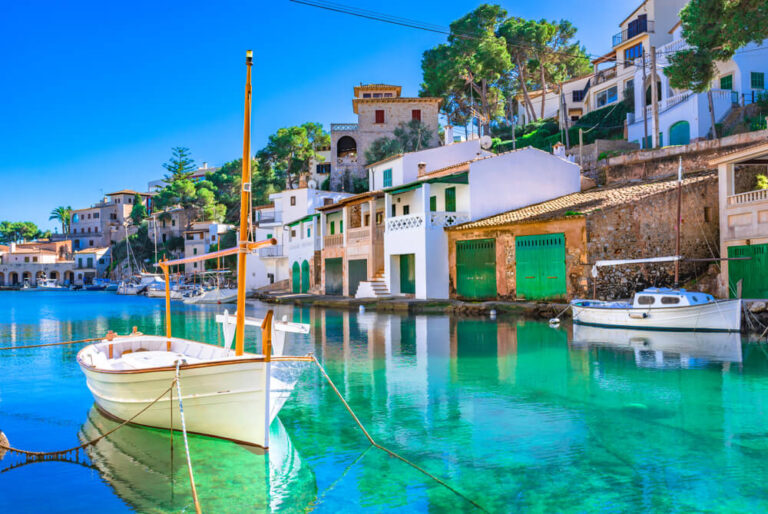
- Coastal villages with life all year, such as Portocolom or Porto Cristo: sea, harbour and neighbours twelve months a year.
- Inland towns, such as Felanitx, Santanyí or Campos: services, weekly markets and a genuinely Mallorcan atmosphere, a short drive from the coves.
- Country houses and fincas: peace and space, in exchange for relying on the car and checking the legal status of what is built.
- Resorts and holiday developments: convenient in season, but much quieter in winter.
We compare the main areas of the southeast in our guide where to buy property in southeast Mallorca.
Everyday life in southeast Mallorca
What newcomers value most is everyday life: coffee by the harbour, the Sunday market in Felanitx or the Wednesday and Saturday market in Santanyí, a swim in a quiet cove in October, or a walk or bike ride along country lanes.
Food revolves around local produce: fish, olive oil, sobrasada, island wine and seasonal Mallorcan cooking. Every village has its patron saint festivities; in Portocolom, for example, the Mare de Déu del Carme festivities fill the harbour in July.
For ideas for your first weeks, see things to do in southeast Mallorca.
Paperwork if you come from another EU country
For EU citizens, moving to Mallorca is straightforward, but there are steps you should not forget:
- Registering as a resident: if you will live in Spain for more than three months, you must register at the Central Register of Foreigners and obtain the EU citizen registration certificate.
- Empadronamiento: registering on the town hall’s population register. You will be asked for it for many procedures.
- Healthcare: if you receive a state pension from another EU country, the S1 form gives you access to Spanish public healthcare. Otherwise, it depends on your employment situation or private insurance.
- Tax residency: if you spend more than 183 days a year in Spain, you generally become tax resident here. Plan this with a tax adviser, taking into account the double taxation agreement with your country.
If you are not an EU citizen (this includes the UK), you will need a visa or residence permit. Check with the Spanish consulate before planning your move.
What to know before you take the step
- A car is almost essential outside Palma. There is public transport, but services are limited in rural areas.
- Languages: Spanish and Catalan (Mallorcan) are both official. The southeast has an established German and British community, but some Spanish makes daily life much easier.
- Cost of living: housing is the biggest expense. Some services cost more in high season, especially in tourist areas.
- Connections: Palma airport has direct flights to many European cities, although there are fewer in winter.
- Try before you buy: spending some time in winter in the area you like is the best way to find out whether it suits you.
Pros and cons of living in Mallorca
What people value most
- Mild climate and outdoor life almost all year.
- Nature, sea and characterful villages close together.
- Good flight connections with the rest of Europe.
- An international community alongside authentic local life.
What to bear in mind
- High property prices compared with mainland Spain.
- Strong seasonality in some coastal areas.
- Reliance on the car outside the main towns.
- Administrative procedures that take patience, especially at first.
If you are thinking of buying to settle here, our guide to buying a house in Mallorca as a foreigner will help.
Frequently asked questions
Can you live in Mallorca all year round?
Yes. Many villages are lively twelve months a year. The key is choosing an area with a stable population rather than a holiday resort.
Which area of the southeast is the quietest?
Inland villages and country houses are the quietest options. On the coast, Portocolom keeps its village atmosphere all year.
Do I need to speak Spanish to live in Mallorca?
Not necessarily, especially in areas with an international community, but some Spanish makes paperwork and settling in much easier.
When do I become tax resident in Spain?
Generally, if you spend more than 183 days a year in Spain or your main economic interests are here. Speak to a tax adviser before you move.