Things to Do in Southeast Mallorca: 8 Places We Recommend
Portocolom, Mondragó, Caló des Moro, Cala Figuera, Santanyí and the Drach Caves: the best things to see in southeast Mallorca, with tips from locals.

In this article
- 1. Portocolom: natural harbour, lighthouse and Cala Marçal
- 2. Felanitx, Sant Salvador sanctuary and Santueri castle
- 3. Mondragó Natural Park
- 4. Caló des Moro
- 5. Cala Figuera
- 6. Santanyí
- 7. Cala d’Or
- 8. Porto Cristo and the Drach Caves
- When to visit southeast Mallorca
- Living in the southeast: beyond a holiday
- Frequently asked questions
Southeast Mallorca combines clear-water coves, fishing harbours that stay alive all year and inland villages with weekly markets. This is our selection of what is really worth seeing between Portocolom, Santanyí and Porto Cristo, written from Portocolom, where we live and work.
This is not a list of “secret spots”: some of these places are well known and get very busy in summer. So for each one we tell you when to go and what to keep in mind.
1. Portocolom: natural harbour, lighthouse and Cala Marçal

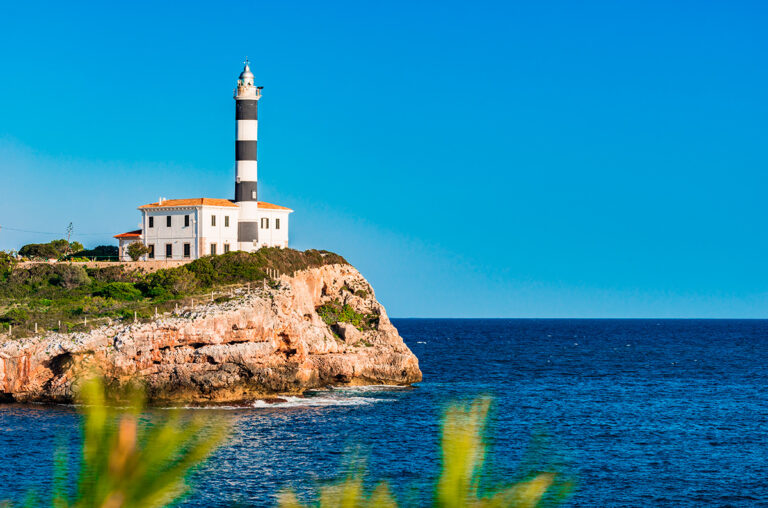
Portocolom, in the municipality of Felanitx, is built around a large natural bay, one of the widest in Mallorca. The fishermen’s boathouses (escars) with their colourful doors, the traditional boats and the waterfront promenade give the village its character, and it does not live from tourism alone: there is local life here in winter too.
- Portocolom lighthouse, on Punta de ses Crestes, first lit on 31 December 1863. From here you look out over the mouth of the bay and the open sea; at sunset it is one of our favourite walks.
- Cala Marçal, a sandy cove with calm water, very easy for families.
- The harbour promenade, with restaurants and terraces facing the boats.
2. Felanitx, Sant Salvador sanctuary and Santueri castle
A few kilometres inland, Felanitx is the main town of the municipality and an authentic Mallorcan village. Its Sunday morning market is one of the liveliest in the area.
Above the town, the Sant Salvador sanctuary sits at 509 metres, the highest point of the Serra de Llevant. From the terrace you can see much of the southeast and, on clear days, the island of Cabrera. Close by is the Castell de Santueri, a 14th-century rock castle built on the site of an earlier Arab fortress.
3. Mondragó Natural Park

Declared a natural park in 1992, Mondragó covers some 766 hectares in the municipality of Santanyí. It combines white-sand coves such as s’Amarador and Caló des Borgit with pine woods and traditional farmland, and it is easy to explore on foot.
Practical tip: there are public car parks at ses Fonts de n’Alis and s’Amarador, paid in high season and free the rest of the year. The visitor centre is next to the ses Fonts de n’Alis car park. Nearby Portopetro is a small harbour with a much slower pace than the busier resorts.
4. Caló des Moro

Next to Cala s’Almunia, on the Santanyí coast, Caló des Moro is probably the most photographed cove in the southeast: small, with white sand and turquoise water between rock walls and pine trees. It can only be reached on foot and space is very limited.
Our advice: avoid the middle of the day in July and August. Early in the morning, or in spring and autumn, you can really enjoy it.
5. Cala Figuera
A fishing harbour tucked into a narrow inlet, with boathouses at water level and fishing boats moored alongside. It is one of the most characterful corners of the Santanyí coast and a lovely place for an unhurried late-afternoon stroll.
6. Santanyí

Santanyí is an inland village built from the golden stone quarried in the municipality itself. Its old town, the Porta Murada gate and the church of Sant Andreu are worth a wander. The Wednesday and Saturday market fills the square and central streets with stalls of local produce, crafts and clothing.
From Santanyí it is only a few minutes to Cala Figuera, Cala Santanyí, Cala Llombards or Mondragó.
7. Cala d’Or

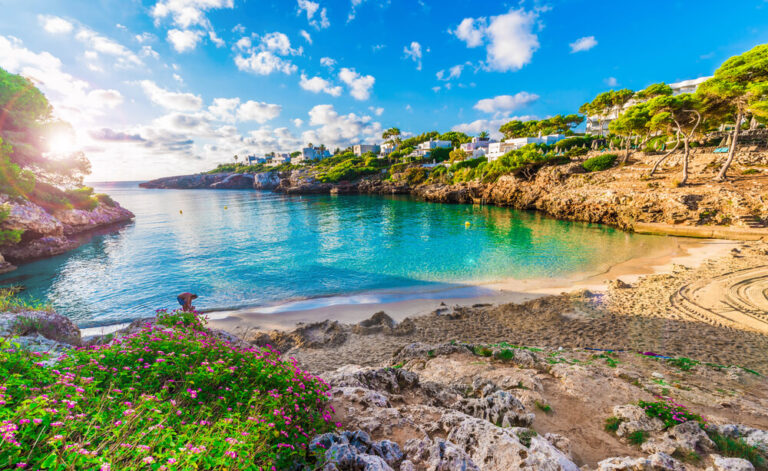
Cala d’Or brings together several small coves, a marina and white, Ibiza-style houses. It is the most touristy place on this list: lively in season and much quieter in winter.
8. Porto Cristo and the Drach Caves
North of Portocolom, in the municipality of Manacor, Porto Cristo is best known for the Coves del Drac (Drach Caves). The visit ends at Lake Martel, an underground lake around 115 metres long, with a classical music concert played from boats. The Coves dels Hams are close by as well.
When to visit southeast Mallorca
In our view, spring (April to June) and autumn (September and October) are the best seasons: the sea is still inviting in early autumn, the coves are quieter and the villages keep their everyday rhythm. In July and August, go early to the best-known coves. Winter is calm and mild, ideal for hiking and for seeing the villages as they really are.
Living in the southeast: beyond a holiday
For many international buyers, their first contact with the area is a holiday in Portocolom, Cala d’Or or Santanyí. If you are thinking of buying here, it helps to understand the differences between areas: villages with year-round life, such as Portocolom, Felanitx or Santanyí, versus more seasonal coastal resorts; access to services; and the type of property available in each.
Lighthouse Living is a family-run agency with an office in Portocolom. We know these villages because we live here, and we work in English, German and Spanish.
Frequently asked questions
What are the most beautiful places in southeast Mallorca?
For a first visit: Portocolom harbour and lighthouse, Mondragó Natural Park, Caló des Moro, Cala Figuera, Santanyí market, Sant Salvador sanctuary and the Drach Caves in Porto Cristo.
What is there to do in Portocolom?
Stroll around the harbour and the fishermen’s boathouses, walk to the lighthouse, swim at Cala Marçal and eat at the waterfront restaurants. Felanitx and Sant Salvador are a short drive away.
When is the best time to visit southeast Mallorca?
Spring and autumn: good weather, fewer people and villages at their usual pace. In summer, go early to the popular coves.
Is southeast Mallorca a good place to live all year round?
Yes, especially in villages with a stable population such as Portocolom, Felanitx or Santanyí, which keep their shops, services and local life in winter. Some very touristy coastal areas are much quieter out of season.
Opening hours, parking and market days can change; check official sources before your visit.